Why Window Seal Repair Matters for Your Home's Energy Efficiency
If you have double-pane windows in your home, you have probably noticed that they do not always stay clear and energy-efficient forever. Over time, the seal that holds the two panes together can break down, leading to foggy glass, drafts, and higher utility bills. In my years working with residential windows across the DFW area, I have seen countless homeowners put off window seal repair because they assume it means replacing the entire window. That is not always the case, and understanding what is actually happening inside the unit can save you money and frustration.
What Happens When a Window Seal Fails
A double-pane window, technically called an IGU (Insulated Glass Unit), relies on a tight seal to trap a layer of Argon gas between the two sheets of glass. That gas acts as an insulator, reducing heat transfer between your conditioned indoor air and the outdoor temperature. The seal itself is typically made from a combination of polyurethane sealant and a secondary layer of silicone caulk. Between the panes, a material called desiccant absorbs any trace moisture that might have been trapped during manufacturing.
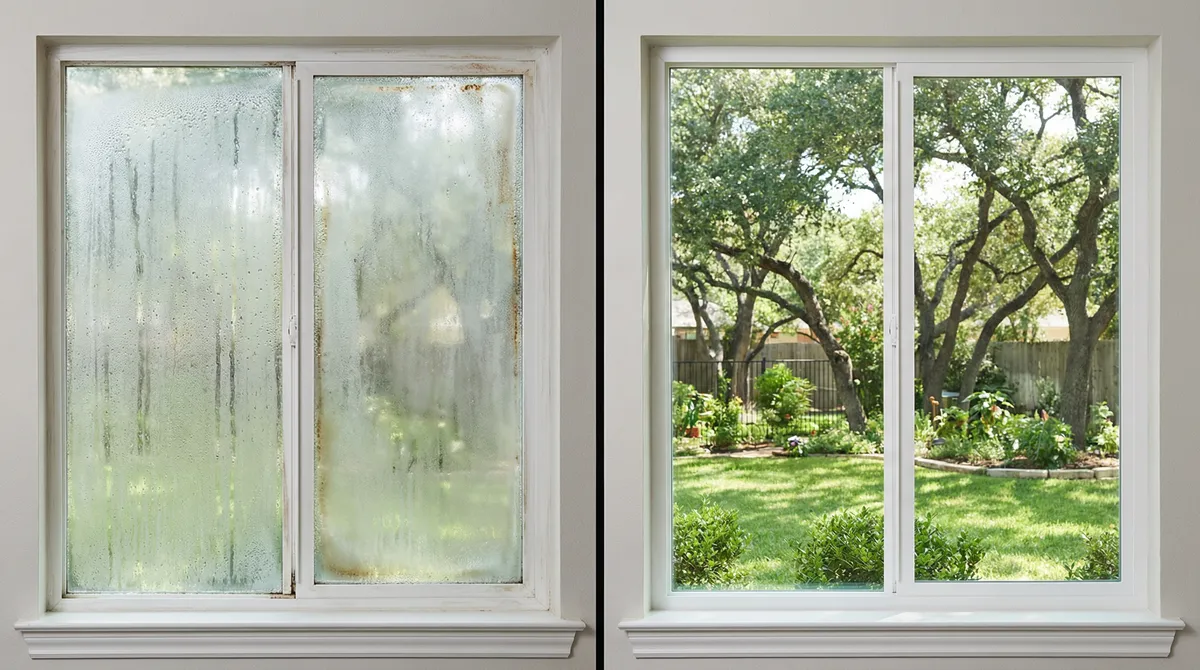
When the seal breaks, the Argon gas escapes and outside air creeps in. More importantly, moisture enters the air space. The desiccant can only absorb so much, and once it is saturated, water vapor condenses on the inner surfaces of the glass. That is the fog you see, and it is a clear sign of window seal failure. At that point, the IGU no longer provides the same energy efficiency, and your HVAC system has to work harder to keep the house comfortable.
I have seen this happen most often on windows that face south or west, where thermal stress from direct sunlight weakens the seal over time. UV degradation also plays a role, breaking down the silicone caulk and polyurethane sealant faster than on shaded windows. In the DFW climate, with its intense summer heat and occasional cold snaps, thermal stress is a constant factor. That is why window seal repair is not just about aesthetics; it is about maintaining the thermal envelope of your home.
Foggy Glass Repair vs. Full Replacement
When a homeowner calls me about foggy glass, the first question is usually whether they need to replace the whole window or just the glass unit. In many cases, a foggy glass repair is possible without touching the frame. The process involves removing the IGU, cleaning the frame, and installing a new sealed unit. This is often more affordable than a full window replacement, especially if the existing frame is in good shape.

However, there are situations where window seal repair alone is not enough. If the frame itself is rotting, warped, or damaged, then glass replacement becomes part of a larger project. I always tell homeowners to check the condition of the sash and the frame before deciding. A new IGU in a bad frame will still leak air and moisture, defeating the purpose of the repair.
Another factor is the type of sealant used in the original unit. Older windows often used a single layer of silicone caulk that was prone to UV degradation. Modern high-performance sealant systems combine polyurethane sealant with a secondary seal that resists thermal stress much better. When you replace the IGU, you get the benefit of that improved technology, which extends the life of the window significantly.
Recognizing the Signs of Seal Failure
Fog or condensation buildup between the panes is the most obvious clue, but it is not the only one. Sometimes you will see a slight haze or a film on the inside of the glass that does not wipe off. Other times, the glass may feel noticeably colder or hotter on the interior surface compared to the room temperature. That is a sign that the insulating gas is gone.
I have also seen cases where the seal fails gradually, causing a slow leak of Argon gas without immediate fogging. The window still looks clear, but your energy bills start creeping up. By the time you notice the fog, the seal has been compromised for months. That is why I recommend checking your windows at least once a year, especially after a harsh summer or a freeze.
If you are unsure, you can try a simple test. On a cold morning, run your hand along the edge of the glass where it meets the frame. If you feel a draft, the seal may be failing. Another test is to hold a lit candle near the edge and watch the flame flicker. But honestly, if you see fogging, you do not need a test. You need window seal repair.
DIY vs. Professional Installation
I get asked a lot whether a homeowner can fix a failed seal themselves. The short answer is: it depends on your skill level and the type of window. Some hardware stores like Lowe's sell DIY repair kits that involve drilling a small hole in the glass, inserting a desiccant to absorb moisture, and then sealing the hole. I have seen these work on very small windows with minor fogging, but they are a temporary fix at best. They do not restore the Argon gas, and the seal you create with silicone caulk is unlikely to match the original factory seal.
For most people, professional installation is the smarter choice. Companies like Apex Windows have the equipment to measure your IGU precisely and order a replacement that fits perfectly. They also use high-performance sealant that bonds better than anything you can buy off the shelf. Plus, a professional installation usually comes with a warranty, which gives you peace of mind that the repair will last.
I once had a customer who tried the DIY route on a large picture window. He spent a weekend drilling, drying, and sealing, only to have the fog return three months later. When he called me, he had already spent half the cost of a professional repair on materials and his time. In the end, he paid for a proper IGU replacement anyway. That is a common story.
Cost Considerations and Return on Investment
The cost of window seal repair varies based on the size of the window, the type of glass, and whether the frame needs work. On average, replacing an IGU costs less than half of what a full window replacement would cost. And because the new unit is more energy-efficient, the savings on your heating and cooling bills can offset the cost within a few years.
If you are planning to sell your home, addressing foggy windows is one of those small investments that pays off. Buyers notice foggy glass right away, and it raises questions about the overall maintenance of the house. On the other hand, clear, energy-efficient windows are a selling point. Some homeowners even use services like HomeAdvisor to find contractors who specialize in this type of work, but I always recommend checking reviews and asking for proof of insurance before hiring anyone.
Preventing Future Seal Failure
Once you have repaired or replaced your windows, you want to keep them in good shape. The biggest enemy of window seals is thermal stress, which comes from rapid temperature changes. In the DFW area, that means protecting your windows from direct sun exposure when possible. Exterior shading, like awnings or trees, can reduce the temperature difference between the glass and the frame.
Regular cleaning also helps. Dirt and debris can hold moisture against the seal, accelerating UV degradation. Use a mild cleaner and a soft cloth on the glass and the frame. Avoid pressure washers near the edges, as the high pressure can force water past the seal. And if you notice any cracks or gaps in the silicone caulk around the frame, address them early before moisture gets in.
Another thing to consider is the quality of the original installation. If your windows were installed poorly, the seals will fail faster. That is why I always recommend hiring a company that offers a warranty on both the IGU and the labor. A good warranty protects you if the seal fails prematurely due to a manufacturing defect or installation error.

When to Call a Professional
If you see fogging, feel drafts, or notice higher energy bills, it is time to act. Window seal repair is a straightforward process for a professional, but it requires the right tools and materials. Trying to patch a failed seal with caulk from the hardware store rarely works for long. A proper repair involves removing the old IGU, replacing it with a new one that has fresh desiccant and Argon gas, and sealing it with high-performance sealant that can handle thermal stress and UV exposure.
In my experience, the best approach is to get a free estimate from a reputable company. They will inspect the window, measure the IGU, and give you a clear picture of what needs to be done. Most will also tell you whether the frame is reusable or if a full replacement makes more sense. That way, you are not guessing or wasting money on temporary fixes.
Foggy glass repair is one of those home maintenance tasks that people tend to ignore until it gets worse. But a failed seal only gets worse over time. The moisture inside can eventually damage the frame, lead to mold growth, and reduce the insulating value of the window to near zero. By addressing the issue early, you save money, keep your home comfortable, and maintain the value of your property.